ABOUT
DELLINGER
ROBERT J.
Oceanic & Atmospheric Scientist
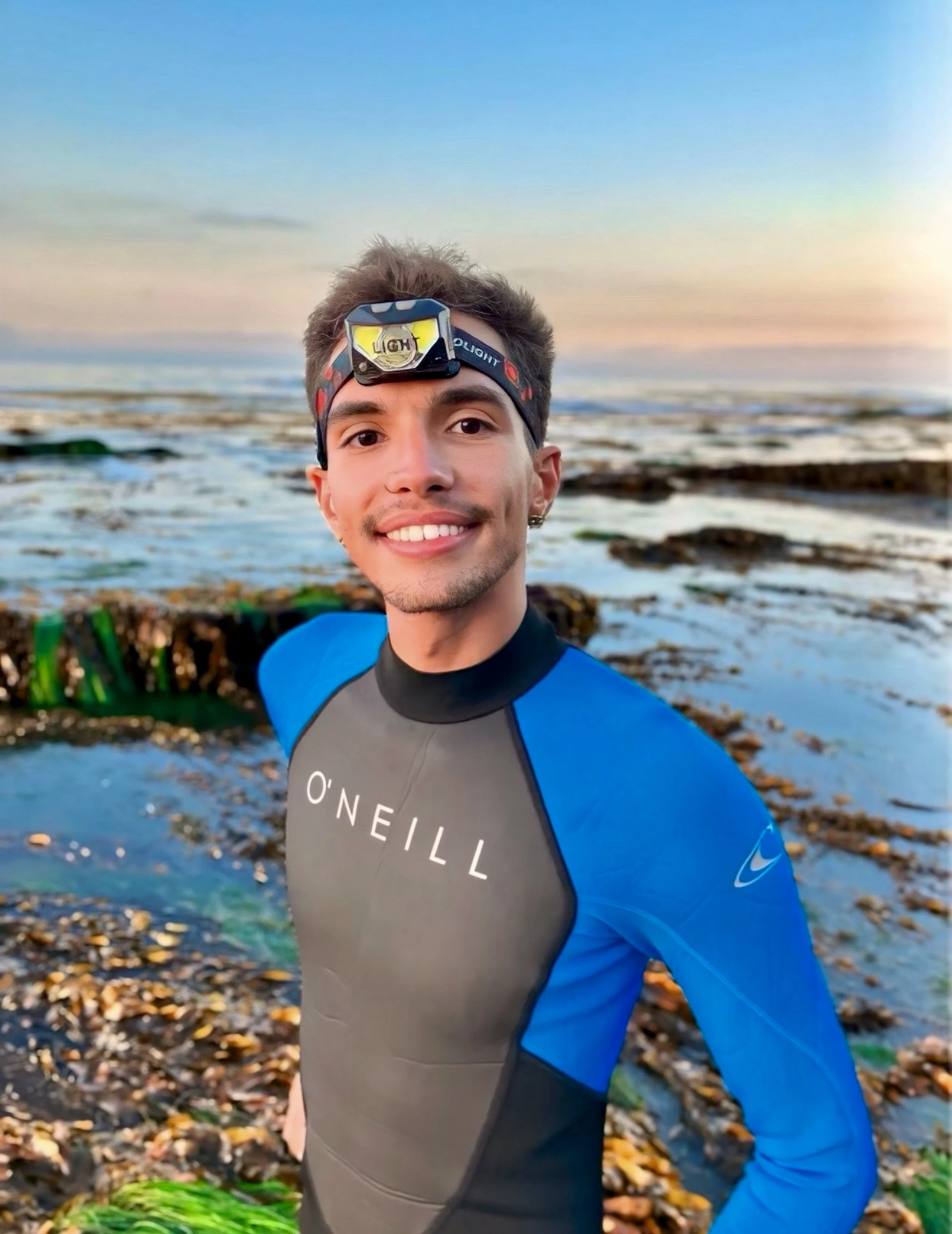
BIO: Robert J. Dellinger (he/they) is an oceanic and atmospheric scientist whose work spans marine and terrestrial systems, with an interest in investigating how ecosystems patterns, processes, and outcomes are shaped by physical (e.g. changes in temperature) and social (e.g. policy decisions) drivers of environmental change. Robert is a Ph.D. student in Atmospheric and Oceanic Sciences at UCLA, and previously attained an M.S. in Biology, a B.A. in International Relations, and a B.S. in Marine and Coastal Science, with training that emphasizes interdisciplinary methods and policy-informed research. Drawing on ecology and biogeochemistry through a critical theory lens, their research aims are to investigate how social systems and power disparities drive environmental change and, in turn, how changing environments impact society. Currently, their research is supported by the National Science Foundation Graduate Research Fellowship Program, the Eugene V. Cota-Robles Fellowship, UCLA Center for Diverse Leadership in Science Fellowship, UCLA Luskin Institute on Inequality and Democracy Doctoral Award, and a NSF Science-Policy Research Traineeship. They are also committed to expanding access to academia for historically excluded communities and believes that the pursuit of knowledge should be accessible to anyone driven by curiosity and wonder. As a researcher and educator, they are guided by an ethic of stewardship that insists we leave environments, academic and natural alike — better than we found them.
Background
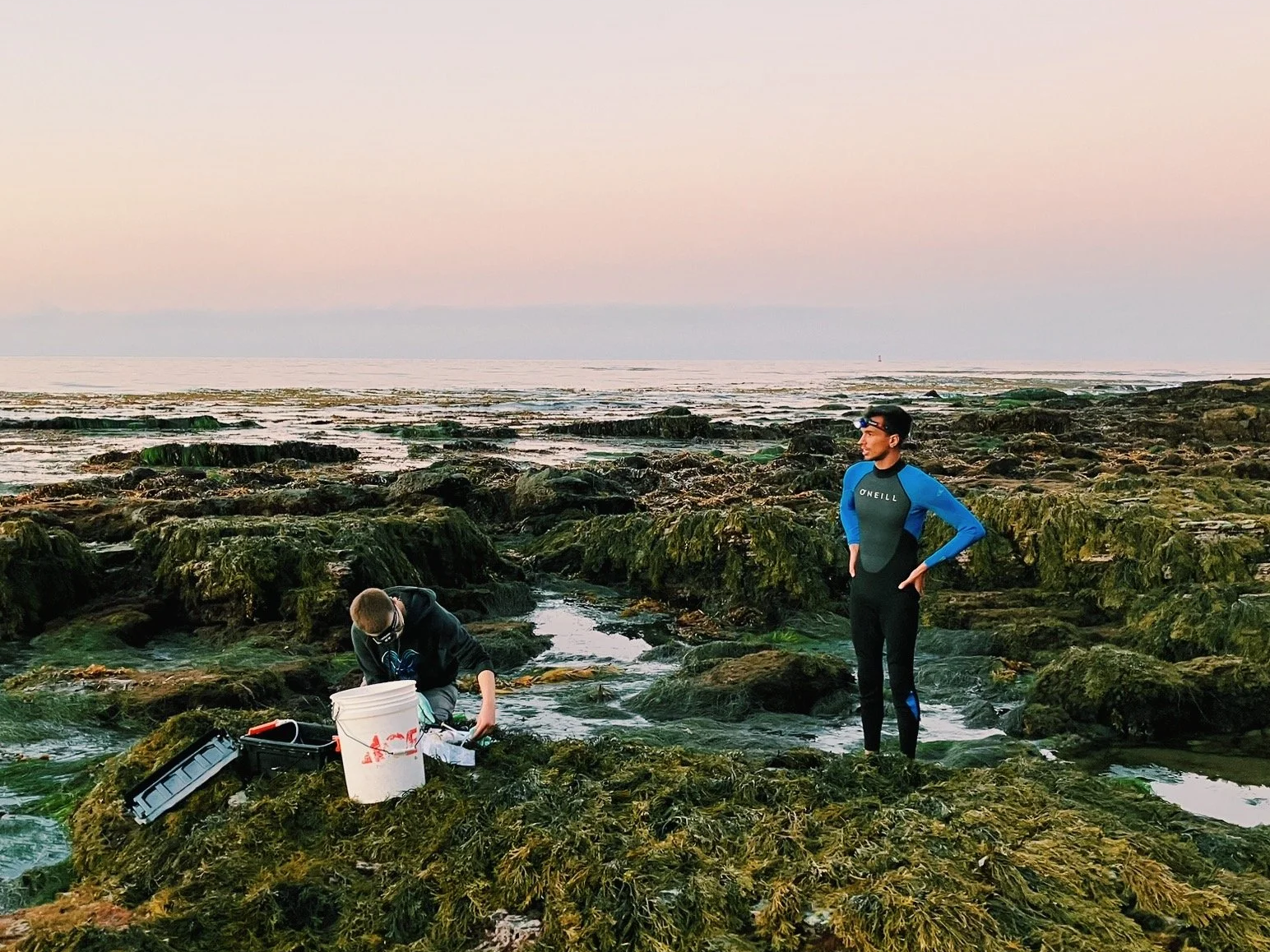
My fascination with the ocean’s complexity began along the Jersey Shore, where my childhood curiosity and wonder roamed freely, and where my father’s warnings as a fisherman about the creeping normalcy of changing oceans became an integral part of my upbringing. Along these same coastlines, I also experienced the devastating impacts of a climate-fueled disaster through Hurricane Sandy, grasping the link between climate change and the vulnerability of coastal communities. These personal and academic reckonings shape the questions I ask, questions that refuse to separate environmental change from the social systems that produce them, and from the communities forced to live with the consequences. Across field and laboratory research, community-engaged work, and science-policy training, I have come to understand that ecological and social processes are inseparable, and I pursue research that seeks to be disruptive and expose these connections rather than merely contributing within existing boundaries. Beyond the lab, I co-founded Climate Futures Studio, a collective for QTBIPOC artists and scientists create storytelling projects that insist on imagining and designing, more just and optimistic climate futures; I also serve on the Board of Directors for Queer Sol (NGO) to support work connecting historically excluded communities to nature. On my free time, I enjoy exploring nature and engaging in creative activities, hiking coastal trails and national parks, as well as painting and photographing the worlds I move through; I also enjoy spending time coding, which lets me turn my curiosity into something tangible, as well as reading books on philosophy, critical theory, and history in order to better understand the world around me and my place in it.
Educational Experience
Education
Doctoral Student (Ph.D.), Atmospheric and Oceanic Sciences
University of California, Los Angeles (UCLA) | (2024-Present)
Advisor: Aradhna Tripati
Focus: Coral biomineralization and symbiont community dynamics under climate variability and coastal land-use change, integrating multi-proxy geochemistry with ancient coral DNA (coraDNA).
Master’s Degree (M.S.), Biological Sciences
California State University, Northridge (CSUN) | (2021-2024)
Advisor: Nyssa Silbiger
Focus: Quantitative marine ecology and biogeochemistry, examining the physiological and energetic responses of marine invertebrates to the combined impacts of ocean acidification and warming.
Bachelor’s Degrees, Marine & Coastal Science (B.S.) &
International Relations (B.A.)
University of California, Davis (UC Davis) | (2017-2021)
Study Abroad Program: “Ecological and Social Issues in Lake Atitlán, Guatemala,” research program investigating ecological and social issues through community-engaged fieldwork.
Certificates & Traineeships
Graduate Certificate, Leaders in Sustainability
UCLA Institute of the Environment and Sustainability
Trainee, Science-Policy National Research Traineeship
National Science Foundation & UC Davis | (2022-2023)
Teaching Experience
Graduate Assistant, Department of Biology, CSUN
Courses: Marine Ecology; Ecology & Society
Teaching Assistant, Department of Biology, CSUN
Courses: Introductory Biology; Biology Laboratory
Distinctions
Fellowships & Research Support
National Science Foundation (NSF) Graduate Research Fellow
Highly prestigious and competitive federal fellowship supporting early-career graduate STEM researchers in the U.S., providing multi-year funding and tuition support.
UCLA Luskin Institute on Inequality and Democracy Doctoral Fellow
Highly competitive cross-campus fellowship supporting doctoral research and public programming committed to confronting systems of extraction and inequality.
Offered in recognition of exceptional qualifications and academic promise, providing multi-year funding and tuition support.
Center for Diverse Leadership Fellow
Awarded to diverse leaders in science engaging in significant scholastic endeavors and creating a positive impact in their communities.
Honors & Awards
Departmental Citation for Outstanding Achievement and Contributions
Departmental recognition presented annually to top graduates in recognition of academic excellence and substantial contributions.
Geology and Marine and Coastal Science Scholarship
Scholarship supporting students who demonstrate strong promise in Marine and Coastal Science.